 Email: info@batquang.com




 VIE
 ENG
Product details
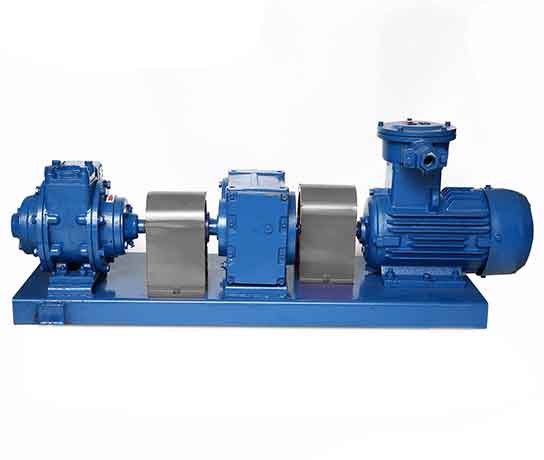
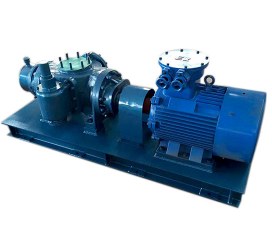
Vane pumps are named according to their operating principle as follows:
When the pump is working, the drive shaft rotates the rotor, and the vanes of the rotor are always pressed against the stator wall by centrifugal force generated by the rotor’s rotation or by springs. There is an eccentricity between the rotor and stator, causing the vanes to both rotate with the rotor and slide back and forth along the rotor grooves. This vane movement creates the suction process (chamber volume increases, pressure decreases) and the discharge process (chamber volume decreases, pressure increases).
There are two types of vane pumps: single vane pumps and double vane pumps.
- A single vane pump performs one suction and one discharge per rotation.
- A double vane pump performs two suctions and two discharges per rotation.
Advantages: Vane pumps can pump air without losing pressure, have high efficiency, operate quietly, and are easy to maintain. However, they cannot handle high-viscosity or high-pressure fluids.
A vane pump consists of the following parts: pump body, shaft, rotor, stator, vanes, and relief valve.
Technical Specifications
- Body Material: Cast iron (CI), ductile iron (DI)
- Shaft: Steel alloy / stainless steel
- Vanes: Non-metallic material
- Seals: Buna, Viton, Teflon
- Flow Capacity: up to 1900 L/min
- Speed: 600 RPM
- Working Pressure: up to 15 bar
- Pressure Differential: 8 bar
- Operating Temperature: up to 107°C
- Viscosity: up to 4250 cSt
- Connection Standards: NPT, ANSI
Related products

